

Vietnam increases electricity imports from Laos to avoid power shortages
Việt Nam đang lên kế hoạch tăng nhập khẩu điện từ Lào nhằm đảm bảo nguồn cung năng lượng và ngăn ngừa nguy cơ thiếu điện, qua đó củng cố vai trò của Lào như một quốc gia xuất khẩu năng lượng trong khu vực.
The move follows a government directive issued after a high-level meeting chaired by Prime Minister Le Minh Hung. Vietnamese authorities were instructed to ensure stable electricity supply, including expanding power imports from neighbouring countries such as Laos and China.
The policy highlights Vietnam’s growing dependence on cross-border electricity trading, with Laos becoming an increasingly important partner thanks to its expanding hydropower and renewable energy capacity.
To support rising imports, Vietnam’s Ministry of Industry and Trade has been tasked with developing additional transmission infrastructure to deliver more electricity to northern Vietnam, with some projects expected to be implemented from 2027.
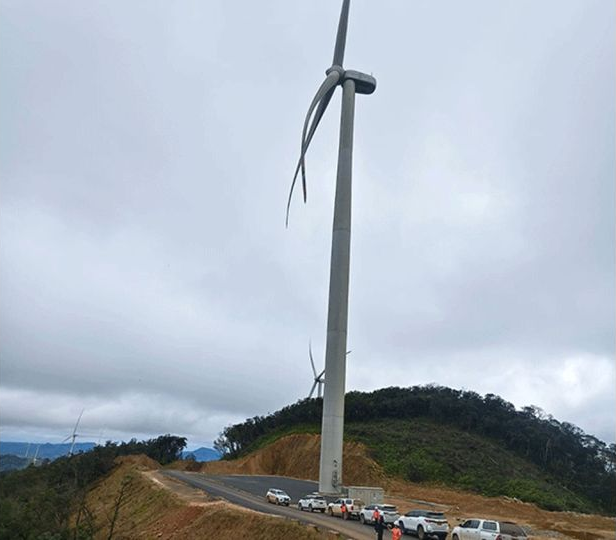
The monsoon wind power project is a landmark initiative, with a dedicated 500kV transmission line carrying electricity from Laos to Vietnam. PHOTO: VIENTIANE TIMES
According to data cited by Tuoi Tre News and Vietnam Electricity (EVN), Laos exported a record 2.92 billion kWh of electricity to Vietnam in the first quarter of 2026, accounting for around 3.8% of Vietnam’s total electricity output during the period.
The volume nearly doubled compared to the 1.33 billion kWh exported in the same period of 2025, reflecting stronger transmission connectivity and the operation of new renewable energy projects in Laos.
By the end of 2025, Vietnam had approved electricity imports from 47 Lao power projects with a combined capacity of 8,260 MW. Power plants with a total installed capacity of 2,379 MW supplied electricity to Vietnam last year, up significantly from 1,700 MW in 2024.
Vietnam is also considering revisions to bilateral agreements and adjustments to its national power development plan to facilitate higher electricity imports from Laos in the future. The move is expected to create further opportunities for Lao energy exports as more projects become operational.
The development aligns with Laos’ strategy of becoming a major regional electricity supplier by leveraging its hydropower potential along with growing investments in wind and solar energy.
Rising demand from Vietnam is expected to increase export revenues and attract further investment into Laos’ energy sector.
In the short term, Vietnam is also preparing emergency measures, including the possible use of floating power plants to address supply shortages, particularly in the industrial north. However, electricity imports from Laos are expected to provide a more sustainable long-term solution.
The directive additionally calls for stronger energy-saving measures, including nationwide electricity conservation campaigns and wider deployment of rooftop solar systems combined with battery storage, helping reduce pressure on the national grid while supporting cleaner energy development.
As regional energy cooperation continues to deepen, the Laos-Vietnam electricity partnership is expected to play an increasingly important role in Southeast Asia’s evolving energy market.
Source: ANN/ Vientiane Times